How to stop rumination.
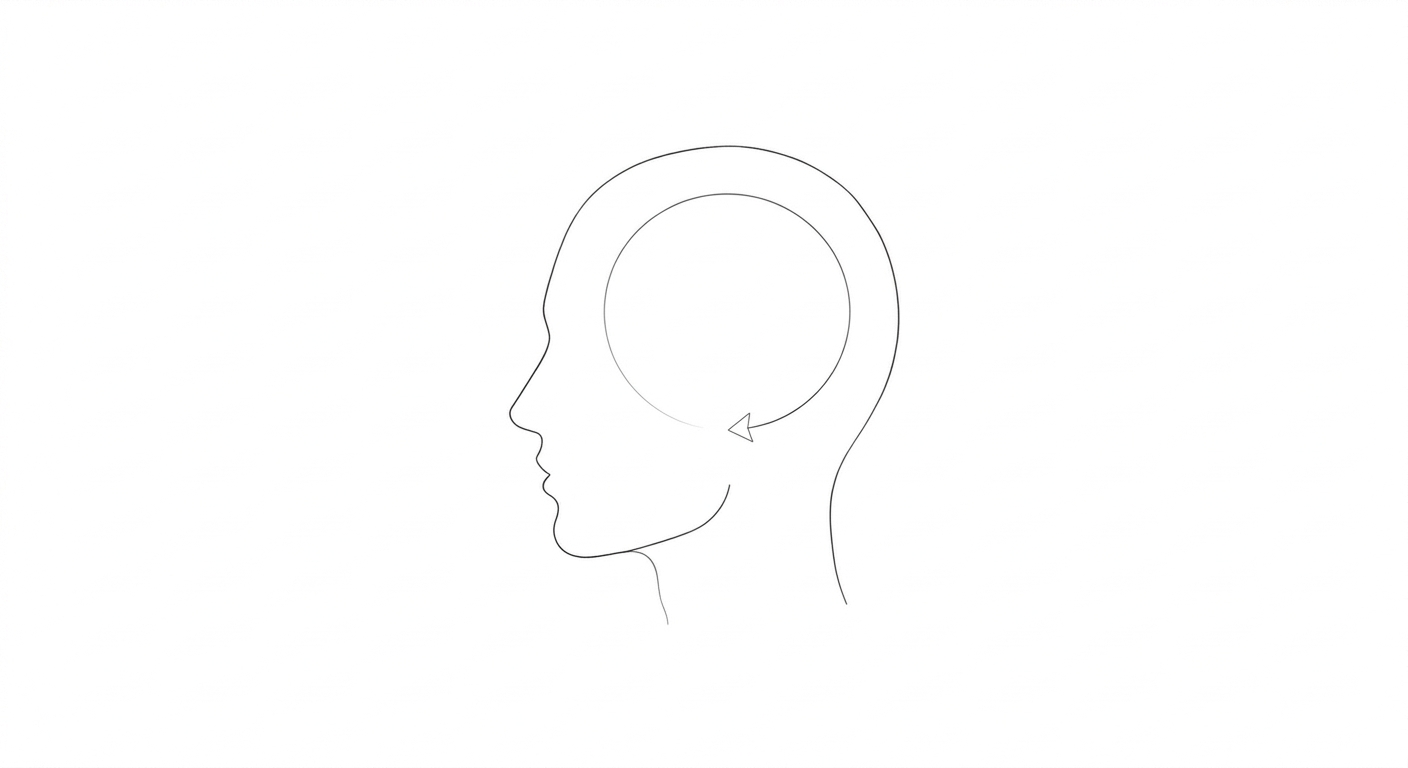
I just got home from an event.
Everything went great. No drama. Great people. Good times.
But now, I’m at home replaying a conversation in my head like it’s still happening.
Mentally editing what I said.
Wondering what other people thought about what I said…
I’m quite certain they’re not thinking about this conversation.
So, why can’t I stop?!
The replay that we can’t stop
It often startes quietly. Sometimes it happens hours later, sometimes days later. You are in the shower, driving, or trying to fall asleep when the conversation resurfaces. You hear your own voice, see the other person’s expression, replay what you said, and imagine what you should have said instead. The moment is over, but your mind is not finished with it. You are not planning a future conversation. You are revisiting a past one. This is replay.
Why certain conversations stick
Not every interaction loops in your head. The ones that replay usually felt emotionally charged, slightly awkward, unresolved, or socially risky. Maybe you revealed something vulnerable, held something back, or sensed a shift in tone you could not fully interpret. When an interaction feels incomplete, the brain treats it as unfinished business. Psychologists call this the Zeigarnik effect, the tendency for unfinished experiences to remain more mentally active than completed ones. If the conversation did not end with clarity or confidence, it stays open in your mind.
Replay feels like problem solving
When you replay a conversation, it can feel productive because you analyze your wording, test alternative responses, and imagine stronger boundaries or smoother phrasing. In small doses, that reflection can be useful. But replay often crosses into repetition, cycling through the same sentences without reaching a new conclusion. The mind confuses repetition with resolution. Because you are thinking about it, it feels like you are working on it. In reality, you are often just reactivating it.
The social threat underneath it
Human beings are deeply sensitive to social evaluation. We care about how we are perceived, whether we were respected, and whether we said too much or too little. Even minor interactions can trigger concerns about status, belonging, or approval. When a conversation threatens how we think we were seen, the brain flags it as important. Replay becomes a way of trying to repair that threat retroactively. You adjust your words in your imagination as if you could edit the past, even though social interactions are not drafts and cannot be revised once sent.
The rumination loops begin
There is a difference between reflection and rumination. Reflection leads somewhere because you extract a lesson and move forward. Rumination loops, keeping your nervous system activated without producing change. Rumination is well documented in cognitive psychology as a pattern linked to anxiety and stress maintenance. Instead of reducing discomfort, it prolongs it. Each replay strengthens the emotional memory of the interaction. The brain believes it is preventing future mistakes, but it is often reinforcing the original discomfort.
Signs you are stuck in replay
You may notice this pattern if you revisit the same exchange repeatedly without gaining new insight, imagine how the other person interpreted you, assume negative judgments, or mentally argue both sides of the conversation long after it ended. You might feel a renewed surge of embarrassment or tension each time the memory surfaces. At that point, replay is no longer reflection. It is activation.
Solution: Close the loop
Conversations replay because your brain is looking for resolution. When something feels unfinished, it keeps resurfacing in an attempt to extract clarity. The first step is to ask a direct question. Is there a specific action I need to take. If the answer is yes, define it clearly. Send a follow up message. Clarify what you meant. Apologize if necessary. State the boundary you avoided. Schedule the conversation you need to have. Once the action is defined and either completed or placed on your calendar, the brain registers that the file has moved forward. If there is no action to take, the work is different. Most replay is about imagined judgment, tone, or perceived awkwardness. There is nothing to fix. In that case, closure comes from a verdict rather than a behavior. You deliberately decide that the conversation is complete. You tell yourself that you responded with the information and capacity you had at the time. You acknowledge that no further step exists. The goal is not to feel fully at peace. The goal is to remove the open question. When the brain no longer believes there is unfinished business, the replay gradually loses its grip.
A different relationship with replay
Your mind replays conversations because it wants social safety and coherence. It wants to reduce uncertainty about how you were perceived. That impulse is understandable. But not every social moment requires post production. You cannot control how every sentence landed or eliminate all awkwardness. You cannot ensure perfect interpretation. You can only show up as you did and decide that the moment is over. Replay offers the illusion of control. Closure requires letting go of it. Close the loop.

